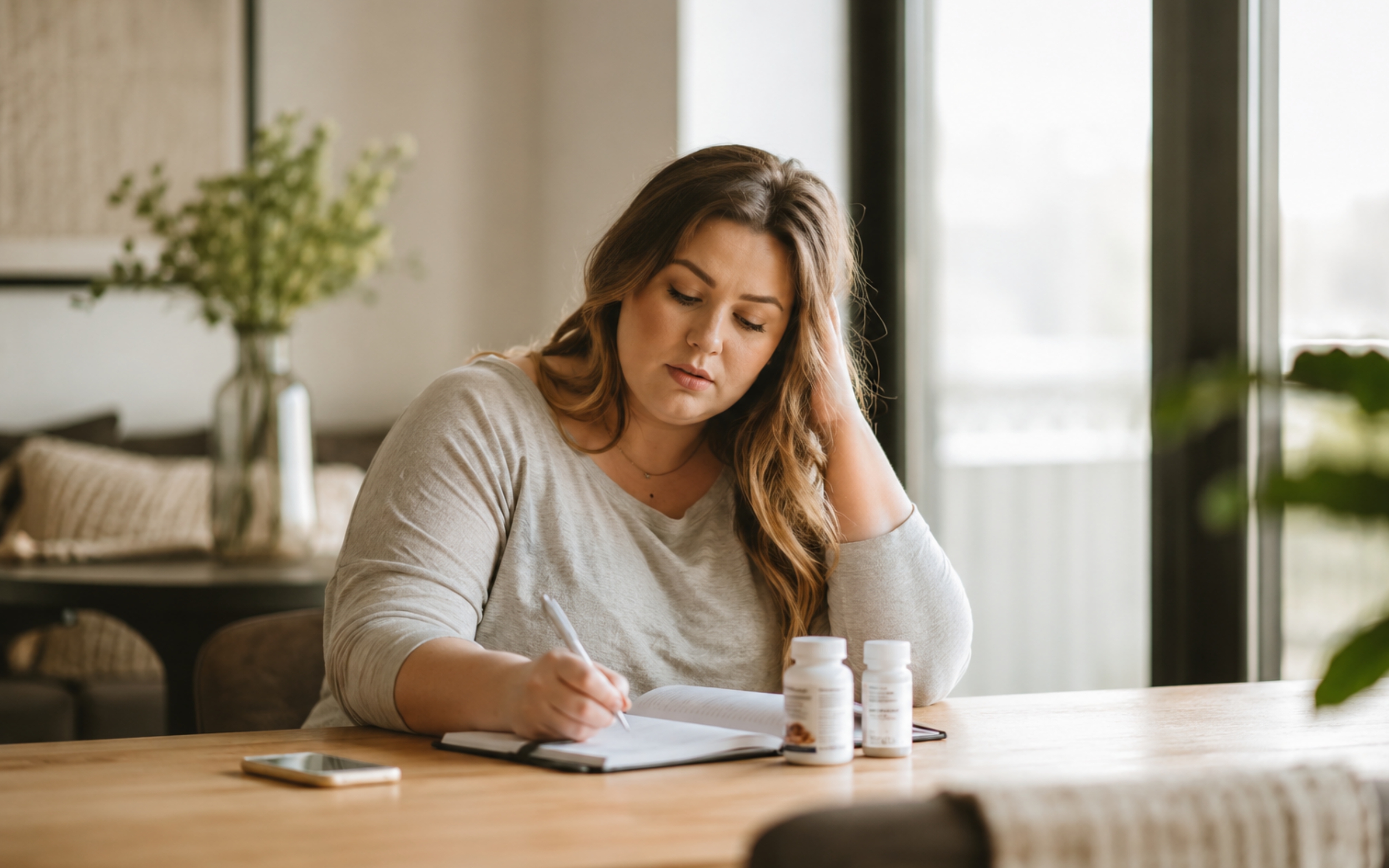
Somewhere in the first month or two on a GLP-1, a lot of people notice something they weren't expecting. The glass of wine they always looked forward to doesn't land the same. Two sips in, they're done. Or they order the drink out of pure habit, leave three quarters of it, and feel faintly puzzled about it on the drive home.
It isn't your imagination and it isn't willpower. GLP-1 medications change how your body handles alcohol, and for a lot of people they change how much you want it in the first place. One of those effects is pleasant. The other can catch you off guard, which is the part worth reading carefully.
Why the desire to drink often drops
GLP-1 receptors aren't only in your gut and pancreas. They also sit in the brain regions that handle reward, motivation, and the particular itch that makes you want a second one. The same mechanism that quiets food noise appears to quiet alcohol noise alongside it.
This is one of the most consistently reported side effects that nobody is prescribed the medication for. People describe it less as discipline and more as indifference. The craving simply doesn't show up. Researchers have taken enough notice that GLP-1 medications are now being formally studied as treatments for alcohol use disorder, and early trial results have been encouraging. That research is still young, and nobody should start a GLP-1 expecting it to solve a drinking problem, but the effect itself is real and widely described.
If you've noticed it in yourself, you're not imagining a benefit. For most people on a weight loss program it's a genuinely useful one: alcohol is calorie-dense, it blunts fat burning while your body processes it, and it wrecks sleep quality in a way that reliably makes the next day's appetite harder to manage.
Why the alcohol you do drink can hit harder
Here's the part people don't anticipate. Drinking less doesn't mean drinking more safely by default, because a GLP-1 changes the conditions alcohol arrives in.
Your stomach empties more slowly. Delayed gastric emptying is central to how these medications work, and it makes alcohol absorption less predictable. Sometimes a drink sneaks up on you much later than expected. Sometimes it arrives all at once. Either way the familiar sense of how two drinks will feel stops being reliable, which matters a great deal if you're driving.
You're probably drinking on far less food. This is the big one. Appetite is suppressed, meals are smaller, and plenty of people on a GLP-1 are eating considerably less than they used to without consciously tracking it. Alcohol on a near-empty stomach raises blood alcohol faster and higher. Your old tolerance was built on a body that ate differently.
Low blood sugar becomes a real risk. Alcohol suppresses the liver's ability to release glucose. Combine that with reduced food intake and you have a genuine setup for hypoglycemia, particularly if you also take metformin, insulin, or a sulfonylurea. Shakiness, sweating, confusion, and a racing heart after drinking are not just a rough night. Those are symptoms worth taking seriously, and they're easy to mistake for ordinary drunkenness.
The side effects you've been managing get louder. Alcohol irritates the stomach lining, relaxes the valve at the base of the oesophagus, and slows gut motility further. If you've been dealing with nausea, reflux, or constipation on your current dose, alcohol tends to make all three worse rather than any of them better. Dose day and the day after are usually the worst time to test this.
Dehydration stacks. Alcohol is a diuretic, and dehydration is already one of the quiet drivers of GLP-1 constipation, headaches, and fatigue. The hangover you get on a GLP-1 is often disproportionate to the amount you drank for exactly this reason.
The risks that deserve a flat answer
Most of the above is a matter of adjusting expectations. Two things aren't.
GLP-1 medications carry a warning for pancreatitis, and heavy alcohol use is one of the most established independent causes of it. The combination is not something to be casual about. Severe, persistent abdominal pain, especially upper abdominal pain that bores through to your back and comes with vomiting, needs urgent medical attention rather than a wait-and-see night.
And many people prescribed these medications have some degree of metabolic dysfunction-associated fatty liver disease, often without knowing it. GLP-1s tend to help that picture. Regular drinking works directly against it. If your provider has flagged your liver enzymes or a fatty liver on imaging, that's a conversation to have specifically rather than a general one about moderation.
If you're going to drink, drink like this
Nobody needs a lecture about abstinence to get through a wedding. A few practical adjustments do most of the work:
- Eat something real first, with protein in it. Not crisps at the bar.
- Recalibrate your volume downward and genuinely expect one drink to feel like two.
- Alternate with water, and drink more water than feels necessary.
- Avoid drinking on injection day or the day after, when nausea and reflux usually peak.
- Skip the sugary mixers. Sweet cocktails are a blood sugar swing on top of everything else.
- Don't drive on the basis of what your tolerance used to be. It isn't that any more.
- If you're on insulin or a sulfonylurea, check your glucose before bed rather than assuming.
Worth saying plainly: there's nothing medically wrong with a glass of wine for most people on a GLP-1. The problem is almost never the one drink. It's the one drink taken on an empty stomach, on dose day, with the expectations of a body that no longer exists.
When to talk to your provider
Bring it up if you've had symptoms of low blood sugar after drinking, if alcohol is consistently triggering nausea or vomiting, if you take insulin or a sulfonylurea alongside your GLP-1, or if you have any history of pancreatitis or liver disease. None of these are reasons to be sheepish. They're reasons to have your dose, your timing, and your other medications looked at together.
And if the opposite is true for you, if drinking has felt difficult to control and you've noticed the medication quieting that, say so. It's clinically useful information, and it's a better conversation to have out loud than to manage alone.
Pomegranate's weight loss program pairs doctor-prescribed GLP-1 medication with licensed provider oversight, so questions like dosing, timing, side effects, and how the medication interacts with the rest of your life get answered by someone who knows your full picture.