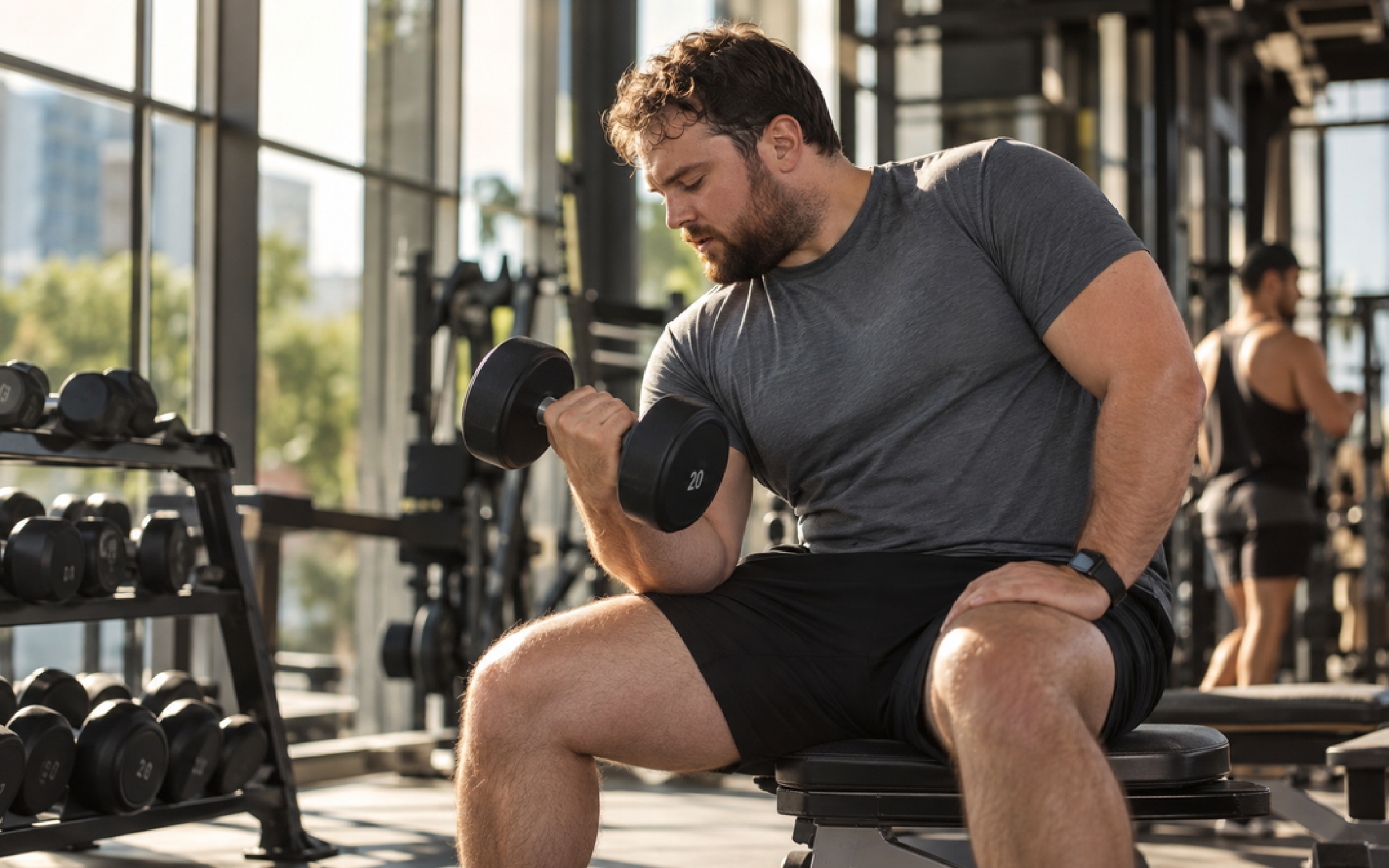
Let's start with the slightly annoying truth. Somewhere around your 40s, your body quietly changes the rules on you. You didn't get a memo. You just notice, one day, that the weight is harder to shift, the stairs feel a little more editorial, and the muscle you used to take for granted seems to be slipping away when you aren't looking.
It is. It's called sarcopenia, the gradual loss of muscle mass that starts in your 30s and picks up pace after 40. And here's the part that matters: muscle isn't just about looking toned or lifting heavy grocery bags. Muscle is metabolically active tissue. It burns calories while you sit there reading this. It keeps your blood sugar steady. It protects your joints and your bones and, honestly, your independence decades down the road.
So when people say "muscle is the organ of longevity," they're not being dramatic. Losing it quietly is one of the biggest things working against you as you age. The good news? You can absolutely fight back. And no, you do not need to become a gym person who grunts and chalks their hands.
Why this matters even more if you're on a GLP-1
Quick but important detour. If you're losing weight, especially fast, on a GLP-1 medication, some of what you lose can be muscle, not just fat. That's not a reason to panic, and it's definitely not a reason to stop. It's a reason to add strength training into the picture, deliberately. The medication handles the appetite side. Your job is to give your body a reason to hold on to the muscle it has. Otherwise you can end up lighter but weaker, which was never the goal.
Resistance training plus enough protein is the combination that tells your body, "Keep this. We need it." Think of the workouts as insurance on everything the number on the scale doesn't show.
Low-impact does not mean low-results
Here's a myth worth killing. A lot of people over 40 assume that to build strength, they have to pound their joints into submission, jumping, sprinting, hauling enormous weights. Not true. Your muscles respond to tension and effort, not to how much your knees hate you afterward. Low-impact strength work can be every bit as effective, and it's a lot more sustainable, because the workout you can actually keep doing beats the brutal one you quit in three weeks.
So let's talk about what to actually do.
The moves worth your time
You don't need fifteen exercises. You need a handful that cover the major movement patterns: pushing, pulling, squatting, hinging, and carrying. Master these and you've trained basically your whole body.
- Sit-to-stands (squats, basically). Sit on a sturdy chair, stand up without using your hands, sit back down slow. That's it. It trains your legs and glutes, the biggest muscles you've got, and you can make it harder later by holding weights or using a lower seat.
- Glute bridges. Lie on your back, knees bent, lift your hips toward the ceiling, squeeze, lower. Kind to your spine, great for your backside and lower back, and weirdly satisfying.
- Wall push-ups or counter push-ups. Push-ups against a wall or kitchen counter build your chest, shoulders, and arms without you having to face-plant on the floor. Walk your feet further back over time to make them tougher.
- Rows with a band or dumbbells. Pulling movements keep your posture upright and your back strong, which counteracts all those hours hunched over a phone. A resistance band looped around a door handle works perfectly.
- Farmer's carries. Grab something heavyish in each hand, a dumbbell, a loaded grocery bag, a kettlebell, and walk. Slowly. Tall. This builds grip, core, and total-body strength, and it's about as functional as exercise gets.
- Step-ups. Step onto a low, stable platform or the bottom stair, drive through your heel, step down with control. Single-leg strength and balance in one, and balance is a thing you will be very glad you kept.
How often, and how hard
Two to three sessions a week is plenty. Truly. More is not automatically better, especially when your recovery isn't what it was at 25. You want your muscles challenged, then rested, because muscle is built during recovery, not during the workout itself.
As for effort, the last two or three reps of each set should feel genuinely hard. Not injure-yourself hard. Just "I could maybe do two more and then I'd really be struggling" hard. That's the sweet spot where change happens. If you finish a set and could clearly do ten more, it's time to add a little weight or a few more reps.
And progress slowly. The whole game over 40 is consistency without injury, because an injury doesn't just hurt, it sidelines you, and lost weeks are muscle you weren't building.
Don't forget the protein
You can lift all you want, but without enough protein, you're trying to build a house with no bricks. As we age we actually need a bit more protein to get the same muscle-building effect, not less. Aim to get a solid source of it at each meal. Eggs, yogurt, fish, chicken, tofu, beans, a scoop of protein powder if that's easier. Spread it through the day rather than cramming it all into dinner.
The bottom line
Strength training over 40 isn't about chasing the body you had at 22. It's about protecting the body that has to carry you through the next forty years. Muscle is the thing that keeps you strong, steady, metabolically healthy, and independent, and it's one of the few aspects of aging you have real, direct control over.
You don't need a fancy gym. You don't need to wreck your joints. You need a few good movements, a couple of days a week, enough protein, and the patience to keep showing up. Start embarrassingly small if you have to. Future you, carrying groceries up the stairs without a second thought at 70, will be deeply grateful you did.
As always, if you've got existing joint issues, heart concerns, or you're brand new to exercise, check in with a provider before you start. Smart beats heroic, every single time.